Introduction
When youth football clubs aim to stand out on the international stage, a key question arises: which teams have shaped the history of the most prestigious tournaments? In that context, the International Youth Football Tournament ÍscarCup stands out as one of the leading references. If you are wondering who the champions and runners-up have been throughout its history, this article offers a complete, clear, and human perspective on the challenges and milestones that have defined the ÍscarCup over the years.
What ÍscarCup is and its evolution
Origins and development of the tournament
ÍscarCup, also known as the Íscar Cup Tournament – Memorial Pedro Sánchez Merlo, was founded in the town of Íscar (Valladolid) in 2011. Held during Easter, its format is based on youth football competition (especially the U10 category, although it has expanded in recent years) under an international structure that has attracted clubs from different countries.
Over the years, what began as a local initiative to promote youth academies has evolved into a prestigious International Youth Football Tournament. Even in its early editions, teams such as FC Barcelona, Valencia, Atlético de Madrid and, in its second edition, AC Milan participated, bringing an international dimension to the competition.
Expansion of categories and impact
Although ÍscarCup initially focused on the U10 category, recent editions have included U8, U11, and other age groups, adapting to the growth of the tournament and the increasing demand from clubs seeking international experiences for their young talents.
In 2026, a participation record is expected: more than 130 teams from around 20 countries, consolidating ÍscarCup as a global reference in youth football.
List of champions and runners-up by edition
Below is a summary of the winners and finalists (runners-up) of each documented edition in the U10 category:
| Year | Champion | Runner-up |
|---|---|---|
| 2011 | Valencia FC | FC Barcelona |
| 2012 | AC Milan | FC Barcelona |
| 2013 | FC Barcelona | Valencia FC |
| 2014 | Valencia FC | AC Milan |
| 2015 | Atlético de Madrid | Real Madrid |
| 2016 | FC Barcelona | RCD Espanyol |
| 2017 | Real Madrid | Rayo Vallecano |
| 2018 | FC Barcelona | Real Madrid |
| 2019 | Real Madrid | FC Barcelona |
| 2021 | Real Madrid | Villarreal CF |
| 2022 | Atlético de Madrid | Sevilla FC |
| 2023 | Atlético de Madrid | Valencia CF |
| 2024 | FC Barcelona | Sevilla FC |
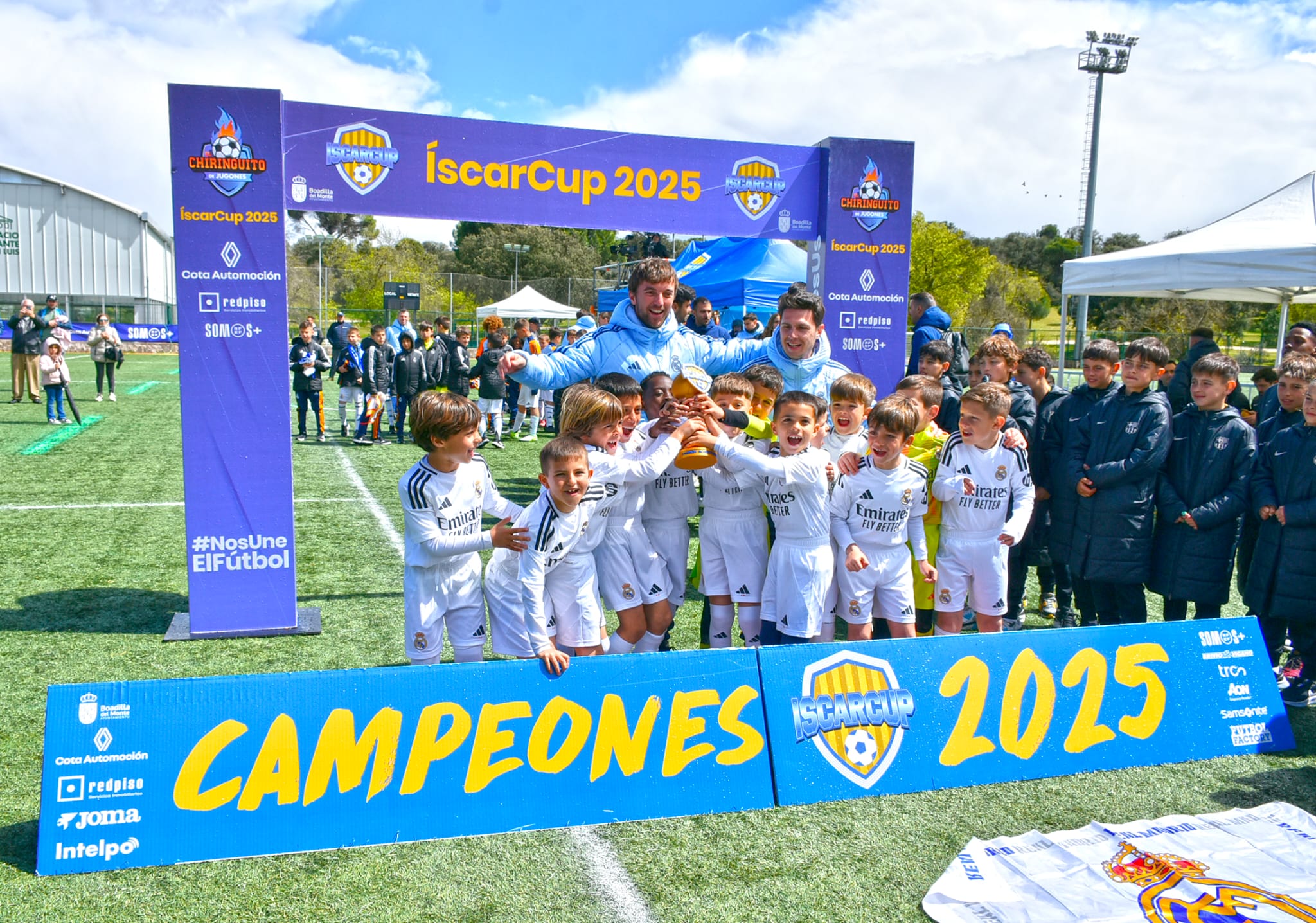
| 2025 | Real Madrid | Real Betis |
This record highlights several interesting patterns:
Diversity of winners: clubs such as Valencia, FC Barcelona, Atlético de Madrid, and Real Madrid appear repeatedly as champions.
Early international presence: AC Milan’s participation and victories in 2012 and its appearance in the 2014 final add prestige and international dimension to the tournament.
Evolution and expansion of categories: more recently, with the inclusion of U8 and U11 categories, the tournament diversified its competitive structure.
Analysis of trends and lessons learned
Dominance of major youth academies
Looking at the winners list, it is clear that the major Spanish clubs have used ÍscarCup as a platform to showcase their youth talent. Teams such as FC Barcelona and Real Madrid stand out with multiple titles, reflecting their investment in youth development structures.
The importance of international participation
The transition from a local showcase to becoming a true International Youth Football Tournament has been key. The presence of foreign clubs — such as AC Milan — brings not only competitiveness but also tactical diversity, cultural exchange, and valuable experiences for young players.
Adapting to the growth of youth football
The inclusion of new categories (U8, U11) and the expansion in the number of teams are signs of strong organizational health. In 2026, with more than 140 teams from around 20 countries, ÍscarCup projects an even stronger future. www.iscarcup.com
Values and memories beyond the trophy
ÍscarCup does not only reward the champion. For many players it represents their first international experience, a moment that teaches lessons about effort, teamwork, and coexistence. The Easter timing of the tournament also strengthens the connection between families and the host region.
How this history inspires the future of youth football
For coaches, clubs, and sports institutions, knowing these champions is more than simple curiosity — it is a roadmap. Understanding which development strategies work, what competitive mindset is encouraged, and how an international tournament is managed provides insights that can be applied to other youth football projects.
If your organization is planning to participate in a future edition of ÍscarCup or to organize a similar tournament, this historical journey provides perspective: strong organization, international vision, and commitment to sporting values are essential.
Conclusion
The history of ÍscarCup champions from its beginning in 2011 to 2025 tells a story of constant evolution, youth development, and growth into a true benchmark of international grassroots football. In this International Youth Football Tournament, clubs focus not only on results but also on the legacy they leave for future generations.
If you are involved with a youth football club or project, it is worth reflecting: how can you integrate these lessons into your structure? And if you would like guidance or support in projecting your participation in high-level tournaments, feel free to contact us — together we can strengthen youth development and take your project to the next level every Easter.
ÍscarCup 2027 · 25–27 March 2027
Register your team